
















As a seasoned restaurateur, you’ve made it through the startup phase with success – and of course, a few lessons learned! Perhaps you’re now looking for your next exciting challenge in the form of starting a restaurant chain. With this audacious goal in mind, you might be wondering, what is a chain restaurant, exactly? A chain is different from a franchise, so it’s key to understand this distinction.
In this guide to chain restaurants, we’re serving up:
- A chain restaurant definition
- The difference between chain restaurants and franchises
- 15 chain restaurant examples to inspire you
- 5 steps to launch a chain restaurant business
Let’s get started building your future empire.
What is a Chain Restaurant?
A chain restaurant is a business with four or more locations, according to the financial institution Farm Credit Canada. Chain restaurants are often large-scale operations with thousands of venues, sometimes spanning numerous countries or even continents.
What is considered a chain restaurant comes down to more than just the brand having multiple locations, though. What makes a restaurant a chain also depends on whether each venue is owned by the same parent company. If a restaurant has four or more locations all owned by one company, then it’s a chain.
Both full service restaurants (FSRs) and quick service restaurants (QSRs) can fall under the chain restaurant definition. The key to these multi-location restaurants’ success is their ability to perfect a standardized menu so guests know that no matter which venue they visit, their meal will be the same – i.e., delicious.
So how did we get here? The history of chain restaurants in America actually dates back over a century. The popular hamburger restaurant White Castle was the nation’s first chain, opening its doors in 1921. Founders Billy Ingram and Walter Anderson started the business by selling sliders for 5 cents. In the years to follow, White Castle opened restaurants across the Midwest and inspired a new business model for restaurateurs. Today, the chain owns 360 locations.
Restaurant Chains vs. Restaurant Franchises
We’ve now answered the question, “What is a chain restaurant?” However, to truly understand what is considered a chain restaurant, let’s talk about what a chain isn’t – a franchise.
While franchise restaurants operate numerous locations under the same brand name (think A&W or Dairy Queen), they are not all owned by the same company. Instead, each venue is owned by a separate individual, also called a franchisee. (Remember, what makes a restaurant a chain rather than a franchise is that all locations are owned by the same parent company).
If you’re looking to operate multiple venues and have full control over the brand, starting a chain restaurant is your best bet. On the other hand, if you like the sound of buying into an established restaurant business, still potentially owning more than one location, but sharing the brand with other owners (franchisees), you might want to franchise a restaurant instead. Both types of restaurants, chains and franchises, provide exciting business opportunities, it’s just a matter of what’s right for your business.
Chain Restaurant Examples
We’ve talked about the granddaddy of chain restaurants, White Castle, but what other chains can you look to for inspiration when considering launching your own brand? Many, it turns out!
Here are 10 of the top chain restaurants you should know.
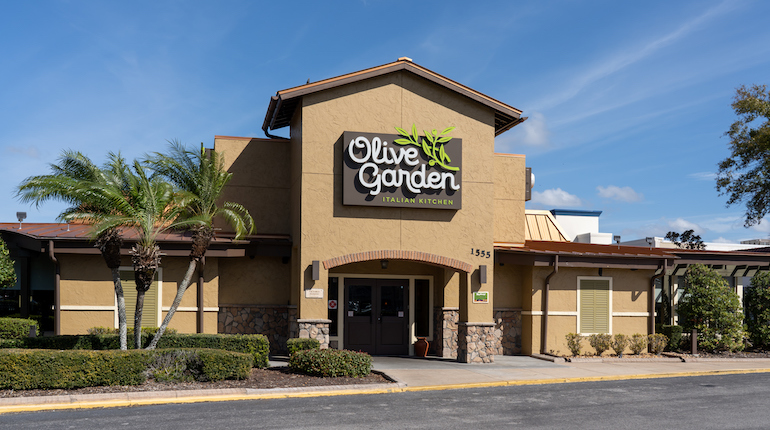
- Olive Garden: While this full service Italian restaurant does franchise outside of the U.S., all locations within the country are part of a corporately owned chain.
- Panda Express: Blending Chinese cuisine and technique with American flavors, Panda Express is one of the top 25 chain restaurant brands in the U.S.
- Chili’s Grill & Bar: As one of the top 25 restaurant chains in America, the full service Tex-Mex restaurant Chili’s is 60% corporately owned.
- Cracker Barrel: Started in Tennessee in 1969 as an homage to homestyle cooking, Cracker Barrel remains 100% corporately owned today.
- The Cheesecake Factory: Started as a Los Angeles bakery in 1972, today all of this full service restaurant’s locations in Canada and the U.S. are corporately owned.
- Waffle House: Founded in 1955 in Georgia, Waffle House is famous for its all-day breakfast. Today, the brand is one of America’s top 50 restaurant chains.
- BJ’s Restaurant & Brewhouse: This California-based restaurant known for its ‘Pizookie’ (pizza cookie) is one of the nation’s top 50 chains.
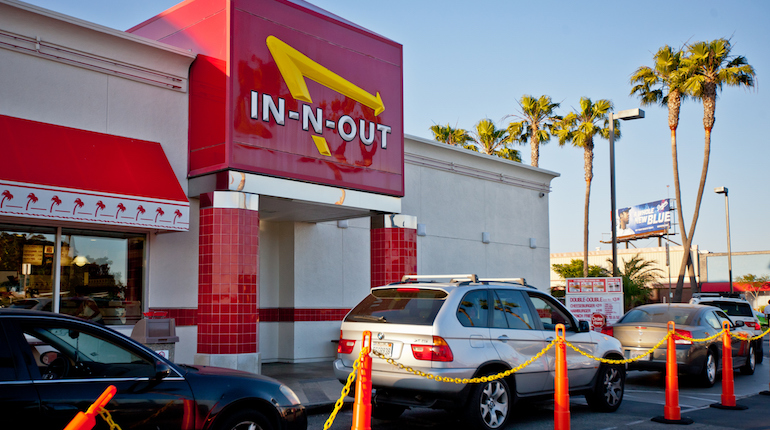
- In-N-Out Burger: California’s first drive-thru hamburger stand, created by Harry Snyder in 1948. Today, In-N-Out burger is a beloved counter service restaurant and quick service chain brand.
- P.F. Chang’s: Asian restaurant P.F. Chang’s opened in 1993. Today, there are more than 300 locations in over 20 countries. P.F. Chang’s is corporately owned in the U.S.
- Bob Evans: This family-style restaurant chain has over 500 locations in 18 states and is a corporately owned chain.
What is the Largest Restaurant Chain in the U.S.?
Chipotle Mexican Grill is the largest restaurant chain in America. While it clocks in at #10 on this list, the brands that top it are actually franchises.
A fast-casual restaurant, Chipotle itself used to be a franchise, but later converted to a corporately owned model to gain greater control over its operations across more than 2,750 locations nationwide.
What is the Largest Restaurant Chain in the World?
With revenue of $32.3 billion, Starbucks is the largest restaurant chain in the world as of 2022. The quick service brand famous for its coffee has 35,000 stores around the globe.
“When you look at their store breakdown, you’ll see that about ~40% of their stores are franchises and ~60% are company owned. That’s because Starbucks used to franchise, but they do not anymore,” according to FranchiseHelp.com.
How to Start a Chain Restaurant Business
Now that we’ve fully answered the question of “what is a restaurant chain?” and provided some successful chain examples, you may be ready to take the next step with your own business. Keep reading to learn how to get started.
1. Begin With One Location
Walking before you run is key when it comes to launching a chain restaurant business. So before you start trying to open up shop in multiple locations, focus on making your first venue a success. You don’t want to replicate anything that’s not working well!
Finding a solid niche for your restaurant is a critical part of the process. What makes a good niche? A distinctive concept. For instance, it’s the difference between a generic pizza place vs an artisanal pizza restaurant offering wood-fired vegetarian pizza.
2. Optimize Your Operations
A distinctive concept and excellent food will only take you so far in the chain restaurant game. To stay in this business long-term, you also need to have processes that run like clockwork to keep your restaurant operating smoothly and profitably.
Analyzing and optimizing your processes is critical. Start with your first location and make sure you have solid, replicable processes for everything from staff scheduling to inventory to financial forecasting and reporting. Then, implement these processes at each new location you open.Get the Guide to the Best POS Systems for Multi-Location RestaurantsCompare the top 6 multi-location POS softwares on features, pricing, payments, and more.Download Now
3. Develop a Strategy for Restaurant Expansion
A restaurant empire isn’t built on a whim! You need a strategic plan for how you’re going to establish your brand as a chain. Which markets do you want to pursue for business expansion? What kind of timeline are you going to target for opening each new location? Do you have essential technology, like a multi-location POS that can support numerous venues? Creating a plan will help you figure out everything and stay on track.
While it’s important to be organized in your approach, you should also allow yourself some flexibility to adjust the plan as needed. For example, if your circumstances change, you might need to pivot to a new strategy and secure new funding.
4. Protect Your Intellectual Property
As you scale your business, it becomes crucial to protect your intellectual property (IP), such as your logo and restaurant slogans. Fortunately, you don’t have to be a legal whiz to do so!
You can protect your IP by registering your logo and obtaining a trademark through the U.S. Patent and Trademark Office. This will give you the rights to use your trademark nationwide, distinguishing your new restaurant chain and its branding as unique to your company.
5. Begin Expanding Your Business
By this point, you should have a distinctive and successful restaurant concept, solid and replicable processes, a strategic plan for expansion, and legally protected IP. Congratulations! You’re ready to expand your business.
Your next step is simply to focus on making sure your second restaurant location is a success. This will depend on the quality of your strategic plan (i.e. choosing the right market to expand into). As you implement your processes at your new venue, look for opportunities to improve them. Take it one step at a time – that’s how every notable chain got to where they are today.Free Restaurant Operations ChecklistThis restaurant operations checklist includes 12 individual lists that can help your staff perform day-to-day operations efficiently and effectively.Get the Checklist
We’ve now answered the question, “What is a chain restaurant?” and explored two types of restaurants – chains and franchises. You have 15 chain restaurant examples to look to for inspiration, and a roadmap with five steps to help you launch your very own chain restaurant business. Look out – there’s a new kid on the block!

by Katherine Pendrill
Katherine is the Content Marketing Manager at TouchBistro, where she writes about trending topics in food and restaurants. The opposite of a picky eater, she’ll try (almost) anything at least once. Whether it’s chowing down on camel burgers in Morocco or snacking on octopus dumplings in Japan, she’s always up for new food experiences.